
Quick Answer
A functional laundry room needs three things beyond the machines: closed upper storage, a folding counter, and a place to hang clothes. In 2026 Charlotte, a cabinet package for a standard laundry room runs $3,000–$8,000; a larger laundry/mudroom combo with a sink, lockers, and stone counter runs $8,000–$18,000+. The single best upgrade is a counter over front-load machines for folding, with a hanging rod above it.
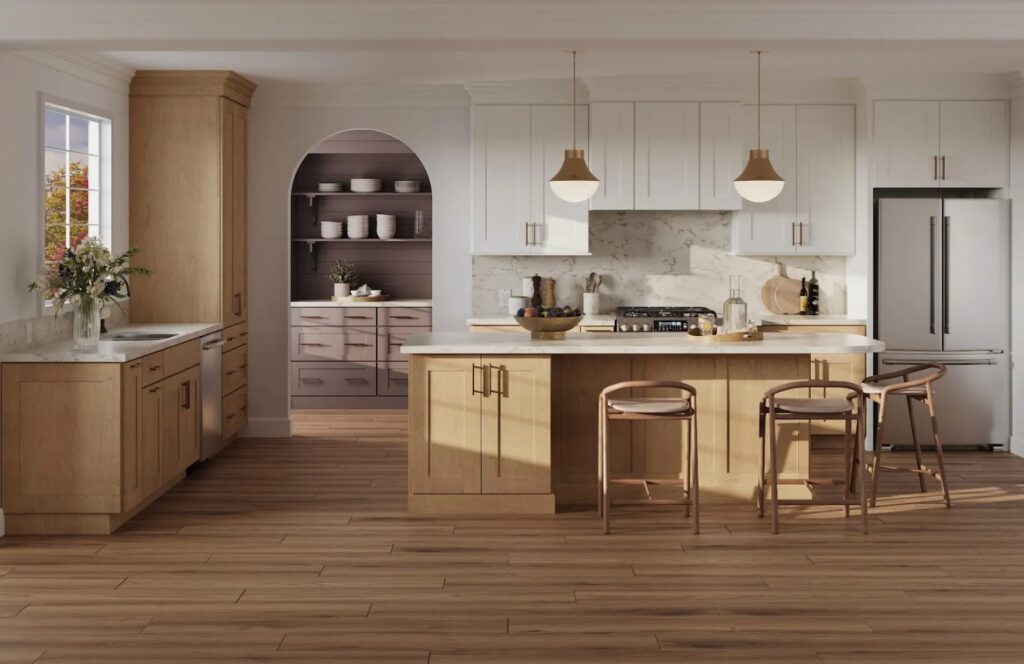
The laundry room is the hardest-working small room in the house, and it’s usually the least designed. Builders hand it over as a box with hookups and maybe a wire shelf, and homeowners live with the chaos for years. It doesn’t take much cabinetry to turn that box into one of the most satisfying rooms in the home.
Laundry rooms are a natural fit for the same custom cabinetry we build for kitchens — durable boxes, real storage, and finishes that match the rest of your home. Here’s how to design one that actually works, plus real 2026 Charlotte pricing.
Laundry rooms are a natural fit for the same custom cabinetry we build for kitchens — durable boxes, real storage, and finishes that match the rest of your home. Here’s how to design one that actually works, plus real 2026 Charlotte pricing.
Design Around the Laundry Workflow
Every functional laundry room supports five steps, and problems almost always trace back to a missing one:
1. Sort — a spot for hampers or pull-out sorting bins so dirty laundry has a home.
2. Wash / Dry — the machines, ideally with storage flanking or above them.
3. Fold — a counter or table surface. The single most-missed feature.
4. Hang — a rod for air-dry items and just-ironed or de-wrinkled clothes.
5. Store — closed cabinets for detergent, supplies, and household overflow. friction every wash.
Design for all five and the room runs itself. Skip one and you’ll feel the
The Highest-Impact Upgrade: A Folding Counter
If you do only one thing, put a solid counter over front-load machines. A quartz or butcher-block top spanning the washer and dryer creates a folding surface exactly where you pull clothes out — no carrying baskets to the bed to fold. It also hides the machines’ tops (where clutter collects) and makes the room look finished.
If you have top-load machines, you can’t counter over them — instead, plan an adjacent counter, a fold-down wall-mounted table, or a rolling cart that tucks away.
If you have top-load machines, you can’t counter over them — instead, plan an adjacent counter, a fold-down wall-mounted table, or a rolling cart that tucks away.
Uppers, Bases, and Going to the Ceiling
Closed upper cabinets beat open shelves in a laundry room. They hide detergent bottles, dryer sheets, and the visual noise of supplies, and they keep dust and lint off everything. In a room this small, take the uppers to the ceiling — you capture storage you’d otherwise waste, and it reads as a built-in rather than an afterthought. Everyday supplies live at reachable height; the top shelf holds the stuff you touch twice a year.
Base cabinets below the counter store bulk supplies, cleaning gear, and laundry baskets. A pull-out hamper or a tilt-out detergent bin turns dead base space into real function.
Base cabinets below the counter store bulk supplies, cleaning gear, and laundry baskets. A pull-out hamper or a tilt-out detergent bin turns dead base space into real function.
Hang It: Rods and Drying
A hanging rod is the most-forgotten laundry feature and one of the most used once it’s there. It handles shirts straight out of the dryer (no wrinkles), air-dry-only items, and clothes waiting to be put away. Options: a wall-mounted rod under an upper cabinet, a pull-out valet rod that hides when not in use, or a section of open rod beside the folding counter.
For serious air-drying, a drying rack cabinet (a cabinet with pull-out rods or a fold-down rack) keeps delicates off the counter.
For serious air-drying, a drying rack cabinet (a cabinet with pull-out rods or a fold-down rack) keeps delicates off the counter.
Sinks and Pet Washes
A utility sink earns its space if you have room — hand-washing, soaking stains, rinsing mops, cleanup after projects. In Charlotte homes with dogs, a pet-wash station (a tiled low basin with a handheld sprayer) is an increasingly popular addition, often placed in a laundry/mudroom combo near the garage entry so muddy paws never reach the main house. Both need plumbing planned in advance.
In tight laundry rooms, a sink is often skipped to preserve counter and cabinet space — it’s a genuine trade-off worth weighing against how you’d actually use it.
In tight laundry rooms, a sink is often skipped to preserve counter and cabinet space — it’s a genuine trade-off worth weighing against how you’d actually use it.
The Laundry / Mudroom Combo
Many Charlotte homes route the garage entry through the laundry area, which makes a laundry/mudroom combo the natural layout. The key to making it work is zoning: keep the laundry functions (machines, folding counter, supply storage) on one wall, and the drop-zone functions (lockers or a bench with hooks and cubbies) on another. When the two uses share a wall and blur together, the room feels cramped and chaotic; when they’re zoned, one room does two jobs cleanly.
Countertops for Laundry Rooms
Quartz is the Charlotte favorite — nonporous, durable, and unbothered by detergent spills and moisture. Butcher block is warmer and budget-friendly but needs sealing near water. Laminate is the value option and has come a long way in looks. Because a laundry counter takes chemical and moisture exposure daily, a nonporous surface like quartz is the lowest-maintenance choice.
2026 Charlotte Laundry Room Pricing
– Basic laundry cabinetry (uppers + a base cabinet or two, no counter): $2,000–$4,000 installed
– Standard laundry room (uppers to ceiling, base cabinets, folding counter, hanging rod): $3,000–$8,000 installed
– Full laundry room (sink, tall utility cabinet, stone counter, drying cabinet, custom finish): $8,000–$14,000 installed
– Laundry / mudroom combo (lockers or bench, hooks, sink or pet-wash, stone counter, full cabinetry): $10,000–$18,000+ installed counter usually adds $800–$2,500 depending on size.
Counters, sinks, and faucets are typically quoted separately. Quartz on a laundry
Common Charlotte Laundry Room Mistakes
1. No folding surface. The most common regret. Counter over front-loaders, or plan an alternative.
2. Open shelving instead of closed cabinets. Looks tidy in photos, collects dust and clutter in real life.
3. Stopping cabinets short of the ceiling. Wastes the storage a small room can least afford to lose.
4. Forgetting a hanging rod. Cheap to add, used constantly.
5. Not planning plumbing for a sink or pet-wash before cabinets. Adding it later means retrofits and compromise.
6. Letting laundry and mudroom functions blur. Zone them so one room does both jobs cleanly.
Match It to the Rest of Your Home
Because we build cabinetry for the whole home, your laundry room can carry the same door style, finish, and hardware as your kitchen and baths — so it feels like part of the house, not a utility closet. Many Charlotte clients add the laundry room to a kitchen project so finishes match and the whole home reads as one design.
Ready to Redesign Your Charlotte Laundry Room?
We design and install custom laundry rooms and laundry/mudroom combos across Charlotte, Ballantyne, SouthPark, Myers Park, Lake Norman, Huntersville, Cornelius, Davidson, Matthews, Waxhaw, Weddington, Concord, Fort Mill, and Rock Hill. A free consultation includes a measurement, a workflow review of how your household actually does laundry, and 3D renderings of the proposed room before anything is built.
Frequently Asked Questions
How much do laundry room cabinets cost in Charlotte NC?
In 2026, a cabinet package for a standard Charlotte laundry room runs $3,000–$8,000 installed, depending on the number of cabinets, counter material, and accessories. A larger laundry/mudroom combo with a sink, lockers, tall cabinets, and a stone counter runs $8,000–$18,000+. Countertops, sinks, and faucets are usually quoted separately.
What is the best layout for a laundry room?
The best layout follows the laundry workflow: sort, wash, dry, fold, hang. A common efficient plan is base and upper cabinets flanking the machines, a counter spanning front-load units for folding, a hanging rod above or beside the counter, and a tall utility cabinet for the vacuum and ironing board. In small rooms, a single wall of uppers plus a counter often does the job.
Should laundry room cabinets go to the ceiling?
Yes, when possible. Laundry rooms are usually small, so taking upper cabinets to the ceiling captures storage you’d otherwise waste and gives the room a finished, built-in look. The top shelf holds rarely-used items; everyday supplies stay at reachable height. A stepstool handles the top shelf.
Do I need a sink in my laundry room?
A utility sink is very useful if you have room for it — for hand-washing, soaking stains, rinsing mops, cleaning up after projects, or bathing small pets. In tight laundry rooms it’s often skipped to preserve counter and cabinet space. If you entertain, garden, or have pets, a sink (or a pet-wash) is usually worth the footprint.
What countertop is best for a laundry room?
Quartz is the most popular laundry counter in Charlotte — it’s nonporous, durable, and easy to wipe down after detergent spills. Butcher block is a warmer, budget-friendly option but needs sealing near water. Laminate is the value choice. Because laundry counters take chemical and moisture exposure, a nonporous surface like quartz is the low-maintenance winner.
Can you combine a laundry room and mudroom in Charlotte?
Yes, and it’s a very popular Charlotte layout, especially in homes where the garage entry passes through the laundry area. The trick is zoning: keep laundry cabinetry (machines, folding counter, supply storage) on one wall and drop-zone functions (lockers or bench, hooks, cubbies) on another, so the two uses don’t collide. We design these combos regularly.
How long does a laundry room cabinet project take?
From consultation to install, a typical Charlotte laundry room runs 5–8 weeks: about a week for design, 4–6 weeks for cabinet production, and 1–2 days for installation, plus stone templating and install if you’re adding a counter. A laundry/mudroom combo with more cabinetry sits at the longer end.
Ready to start your cabinet project?
Visit Our Showrooms
We’d love to welcome you to one of our showroom locations. Visit us to explore our cabinetry collections, discuss your project, and experience the craftsmanship that defines FigTree Cabinets.